
Las Cruces Bowling Alley Massacre
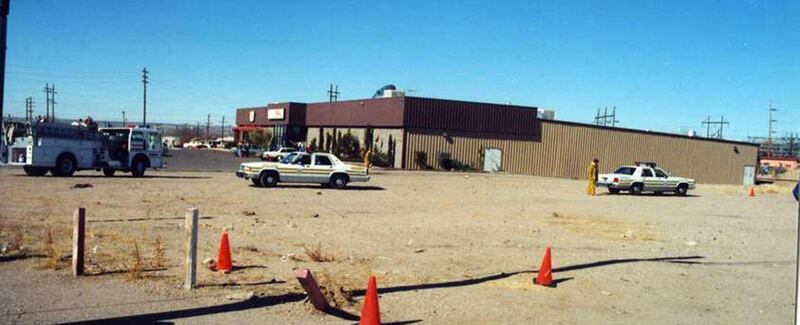
On Saturday morning, February 10, 1990, Las Cruces Bowl was still closed to the public. Inside, the morning was unfolding like any other as the people there prepared for the day ahead. Nothing about it suggested that this Saturday would be remembered more than thirty-six years later.
Inside, Stephanie Senac was preparing the bowling alley for the day with her twelve-year-old daughter, Melissa Repass; Melissa’s thirteen-year-old friend, Amy Houser; and cook Ida Holguin, who had just transferred to the morning shift so she could attend bingo with her mother in the evenings.
Around 8:15 a.m., Stephanie’s brother, Stephen, arrived to pick up a backpack he had forgotten the night before while working the closing shift. Before leaving, he told Stephanie that the door had been unlocked and reminded her to be sure to lock it behind him. Running behind for class, Stephen left the bowling alley.
Shortly afterward, two armed men walked inside. One confronted Ida in the kitchen while the other encountered Stephanie, Melissa, and Amy in the office. Ida was then escorted into the office with the others.
While in the office, the two men took an amount of cash and checks believed to total less than $5,000. Ida later recalled hearing shuffling and movement while the gunmen were in the office. In the documentary reenactment, the men are depicted searching and asking, “Where could it be?” and “Where’s the rest of the money?” Later retellings have characterized that activity as the men rifling through a filing cabinet, but that specific detail is not actually spoken by Ida or Melissa in the documentary transcript.
It was sometime around this point, at approximately 8:20 a.m., that Steven Teran arrived at Las Cruces Bowl with six-year-old Paula Holguin and his two-year-old daughter, Valerie. Noticing that the bowling alley was unusually quiet, Steven headed toward the office, where he saw the two men with guns.
Steven was a first lieutenant and platoon leader in the New Mexico National Guard. His wife, Audrey, later said she believed that if Steven realized what was happening inside the bowling alley, he would have fought the gunmen. Whether he did is unknown. What we know is that his arrival with Paula and Valerie changed the scene: three more people had walked into a robbery already underway.
Although we don’t know the exact order of events, or whether the men intended this to be a quick robbery before getting out, it is possible that Steven Teran’s unexpected arrival startled the gunmen or changed whatever they had planned. What we do know is that, at some point after Steven arrived, the gunmen shot all seven people inside the bowling alley.
Sometime after Steven and the girls arrived and before 8:33 a.m., all seven people had been shot, and a desk in the office had been set on fire.
At 8:33 a.m., Melissa Repass was able to get up and call 911. She told the dispatcher that she needed police and fire and that people had been shot. During the call, when the dispatcher asked how many people were hurt, Melissa counted them one by one: seven.
Officers arrived within minutes. Four of the victims were transported to the hospital alive. Two-year-old Valerie Teran would not survive, leaving three immediate survivors: Stephanie Senac, Melissa Repass, and Ida Holguin.
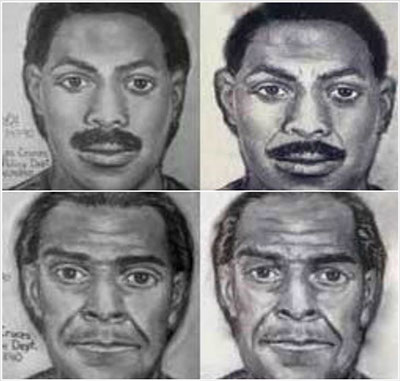
Those survivors were able to provide investigators with descriptions of the two men, which were used to create composite images that remain among the most recognizable pieces of evidence in the case.
In 1999, nine years after the shooting, Stephanie Senac died from complications police attribute to the injuries she suffered that morning. Today, Melissa Repass and Ida Holguin are the two surviving victims of the Las Cruces Bowling Alley massacre.
The case did not end when the gunmen left the bowling alley. It continued in the lives of the people who survived, in the families who buried those they loved, and in a community that never received an answer for what happened that morning. Over the years, Unsolved Mysteries, Charlie Minn’s documentary about the case, anniversary coverage, and repeated public appeals have brought the story back into view, each time hoping that someone who knows something might finally recognize the weight of what they have carried.
That human element may matter more than any graphic image ever could. The public does not need to see victims lying in blood to understand what was taken from them. They need to understand who these people were, who loved them, who survived, and what thirty-six years without an answer has meant. What happened inside Las Cruces Bowl happened directly to seven people, but its echo reached their families, their friends, and an entire community. And after all these years, that echo may be exactly what reaches the person who has the one piece of information investigators still need.
More than thirty-six years later, the Las Cruces Bowling Alley massacre remains unsolved, and Las Cruces police continue to ask the public for information. Investigators have revisited evidence collected from the scene, including fingerprints and biological evidence. Retained evidence has been tested for DNA more than once, including with newer methods designed to work with smaller amounts of material, but no usable offender DNA profile has been publicly reported. No fingerprint match, recovered murder weapon, arrest, or publicly identified suspect has named the two men shown in the composites.
There is still a $25,000 reward offered through Las Cruces–Doña Ana County Crime Stoppers for information that leads investigators to the identities of the men responsible. And someone who knows something does not have to give their name to come forward.
Anonymous tips can be submitted to Las Cruces–Doña Ana County Crime Stoppers at 1-800-222-TIPS (8477) or through the official P3 Tips form (opens in a new tab).
Thirty-six years have passed. Investigators have tested evidence with technology that did not exist in 1990. They have revisited old leads, circulated updated composites, appealed to the public again and again, and continued searching for something that will identify the two men who walked into Las Cruces Bowl that Saturday morning.
The answer may no longer be waiting in a laboratory.
It may be waiting with someone who knows.